Tag Archives: Past

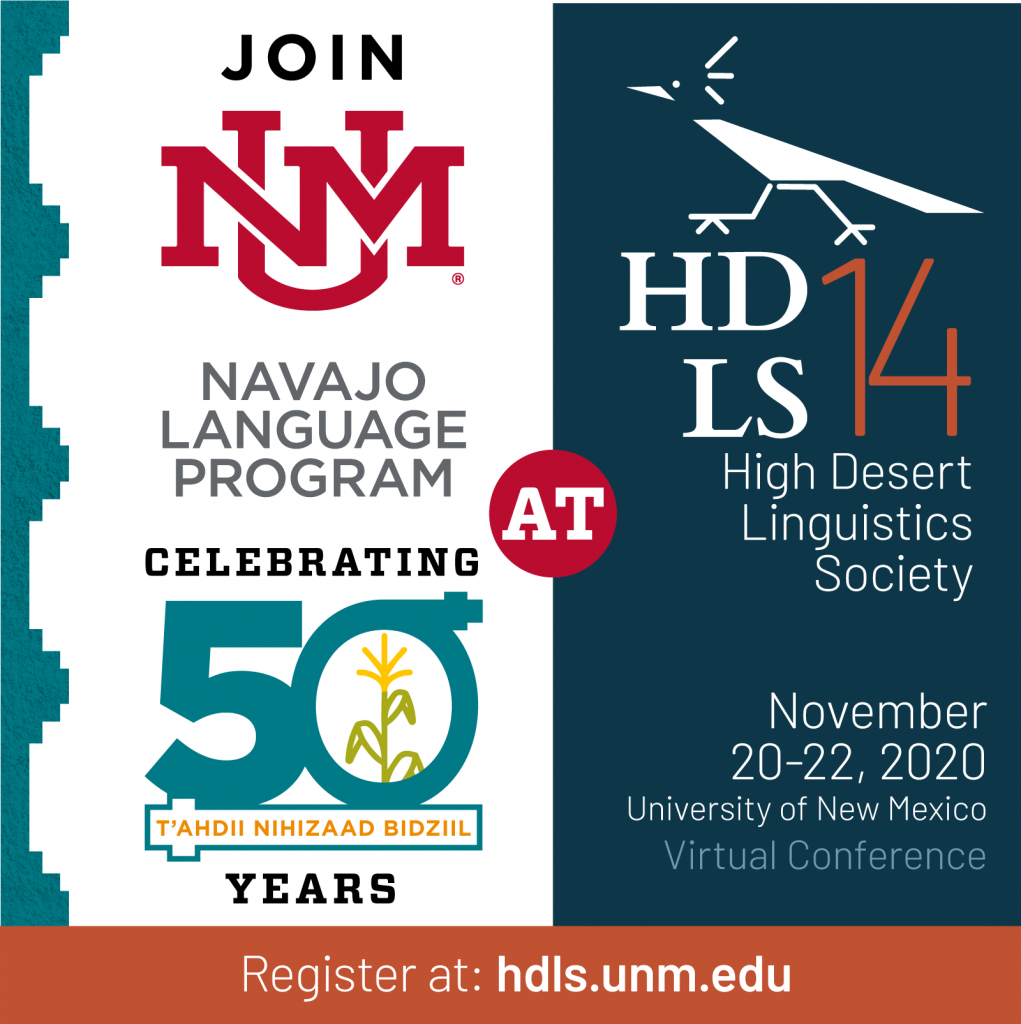
Celebrating 50 years of Navajo at UNM with HDLS 14

https://hdls.unm.edu/

The Navajo Language Program is commemorating fifty years of Diné language instruction at the University of New Mexico. We started as a single class in 1970 and have overcome numerous challenges and celebrated achievements while continuing to teach the Diné language throughout the years. During the 2020-2021 academic year, we celebrate five decades of memories, highlight our history, and recognize those who made the program what it is today. In this panel presentation, we will share our successes by focusing on our current work.

Since 1970, we have taught hundreds of classes, inspired new generations of Navajo speakers,studied the structure of the Navajo language through data-driven research, and produced seminal texts on the Navajo language and culture. The Navajo Language Program continues to work towards our mission of providing quality instruction of Navajo language and Navajo linguistics.

Today, we nurture diversity and promote the incorporation of culture into language instruction as together they contain a knowledge system and values unique to the Diné identity. Now more than ever, we recognize that the Navajo Language Program contributes to the maintenance and revitalization of the Diné language. This program continues to enhance and increase the landscape of diversity in scholarship at the University of New Mexico. Join us at HDLS celebration of our 50th anniversary.

Register to attend HDLS 14 and our panel at: https://secure.touchnet.com/C21597_ustores/web/product_detail.jsp?PRODUCTID=1375&SINGLESTORE=true
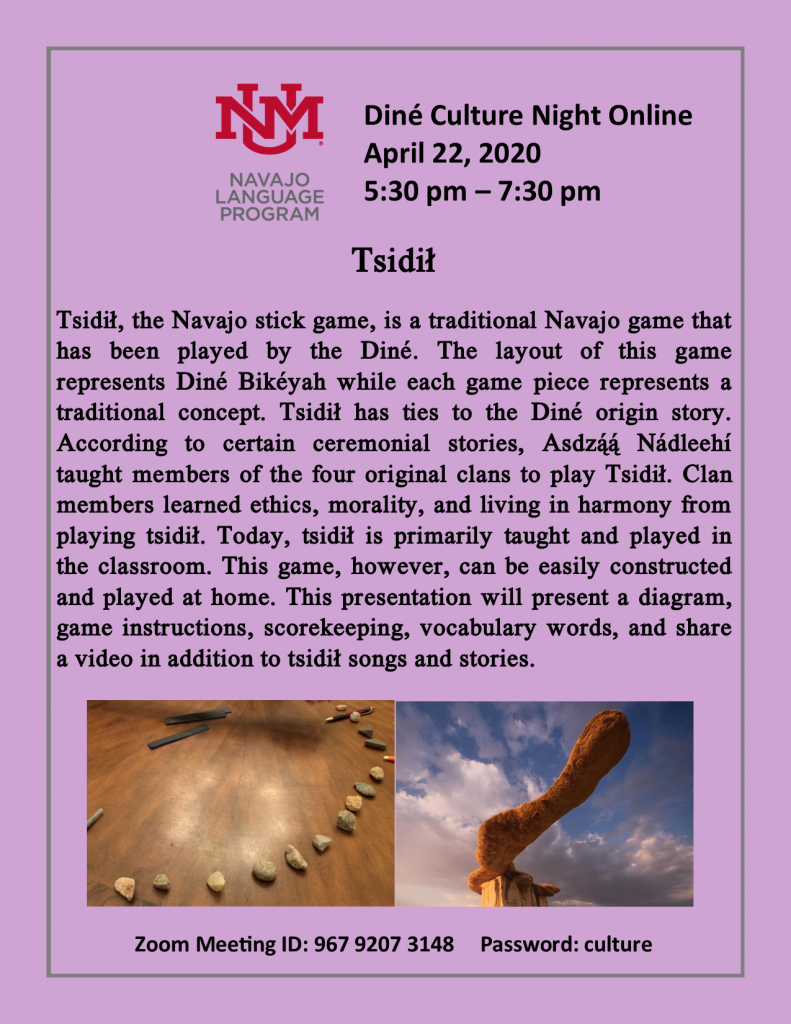
Diné Culture Night Online — May 6th, 2020

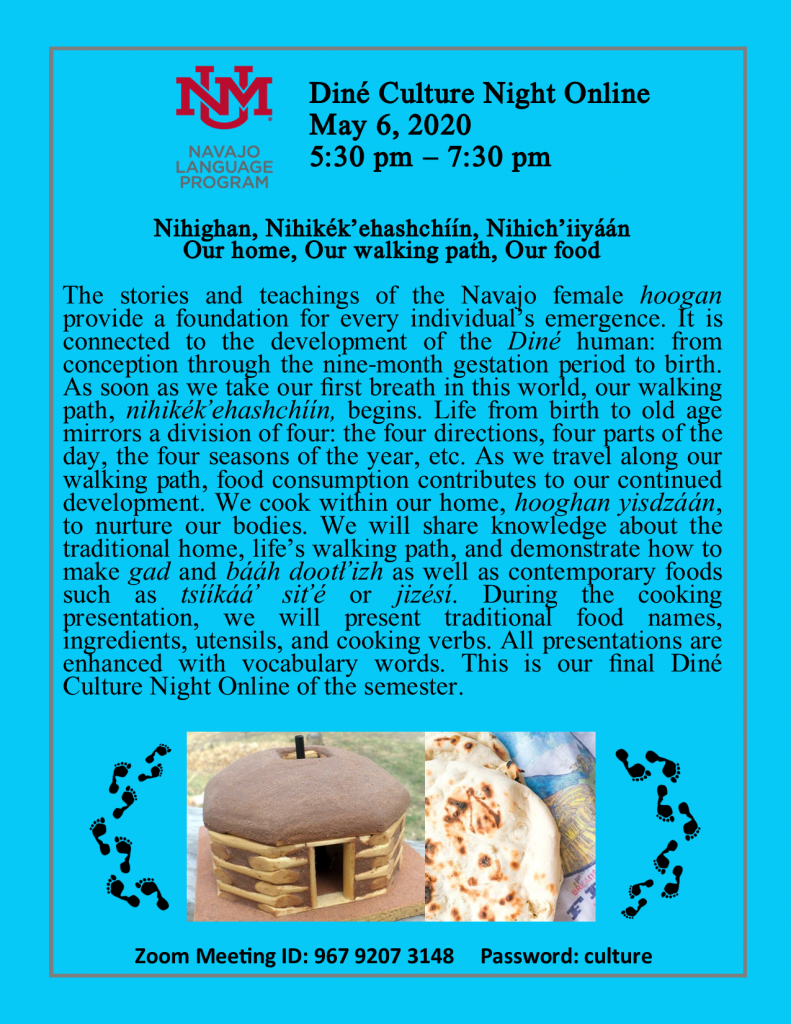
Nihighan, Nihikékʼehashchíín, Nihichʼiiyáán

Our home, Our walking path, Our food

Staying home in this time may have many of us paying much attention to our hooghan. Nihighan (our home), Nihikék’ehashchíín (our walking path), Nihich’iiyáán (our food) are the topics that will be shared on Wednesday, May 6th at 5:30pm MDT. Please join us online for our final Diné Culture Night of the semester. T’áá hooghandi sínídáago nił ałhíidiikah.

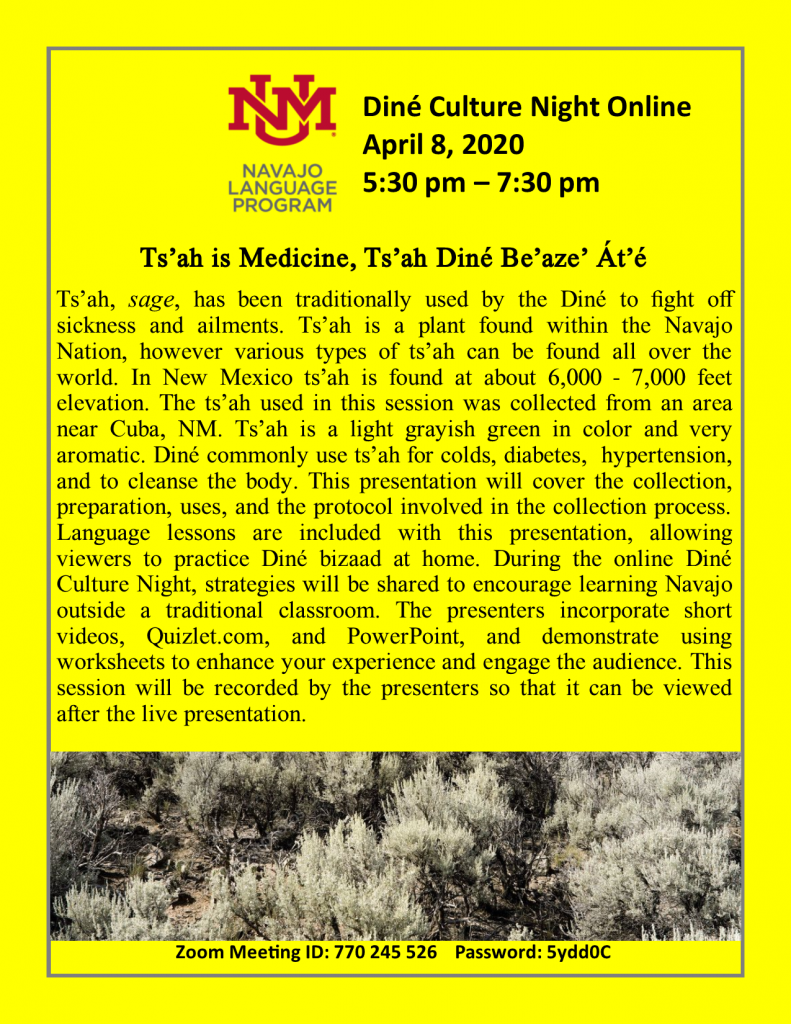
Diné Culture Night Online — April 8th, 2020

Tsʼah Diné Beʼazeʼ Átʼé

Tsʼah is Medicine

Join us tonight for our first ever Diné Culture Night online! Tonight’s topic is Tsʼah is Medicine, Tsʼah Diné Beʼazeʼ Átʼé. If you can’t make it tonight starting at 5:30pm, don’t worry because it will be recorded and shared for viewing anytime. This will be a Zoom meeting with ID and PW codes on the flyer.

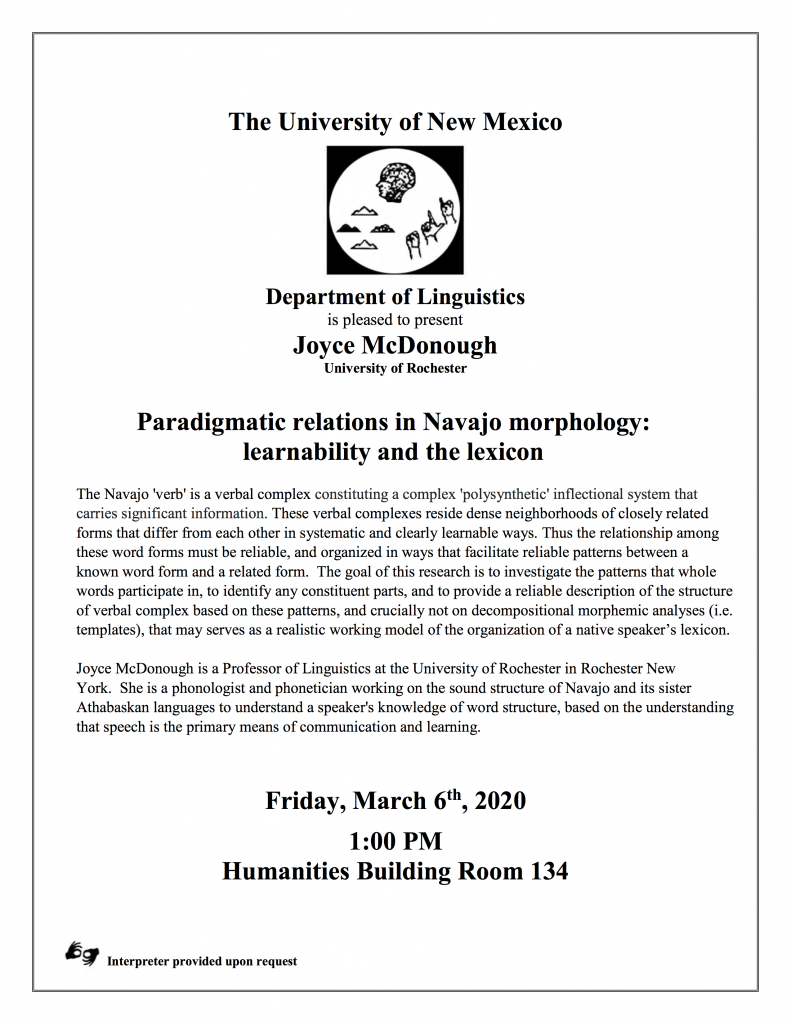
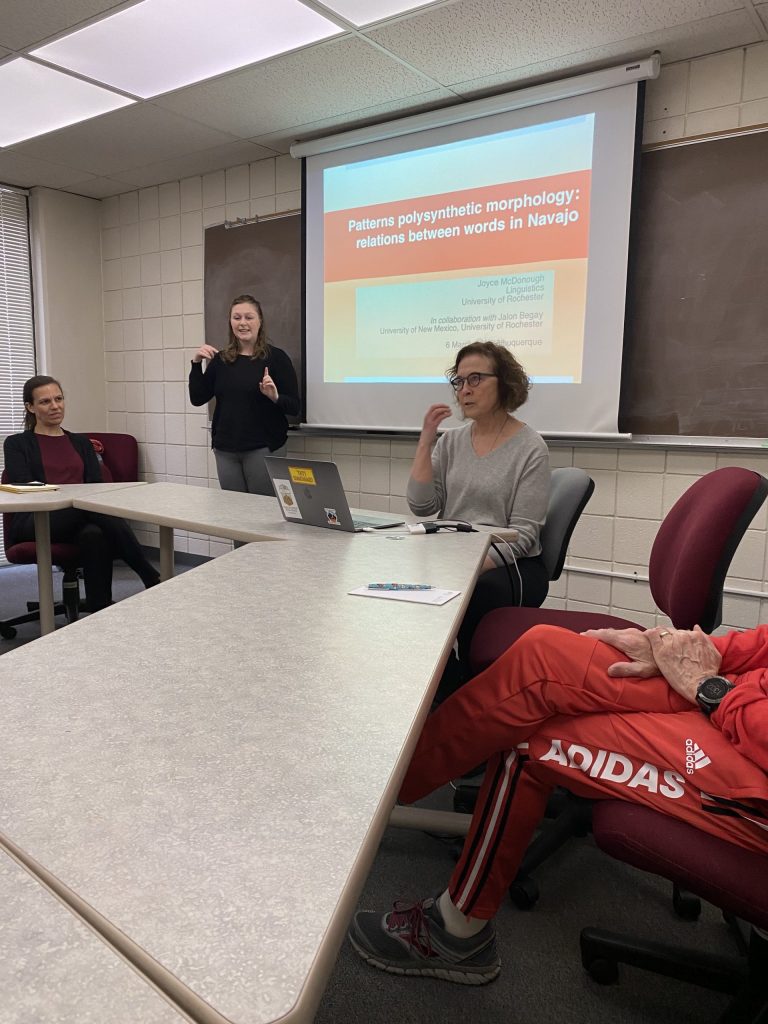
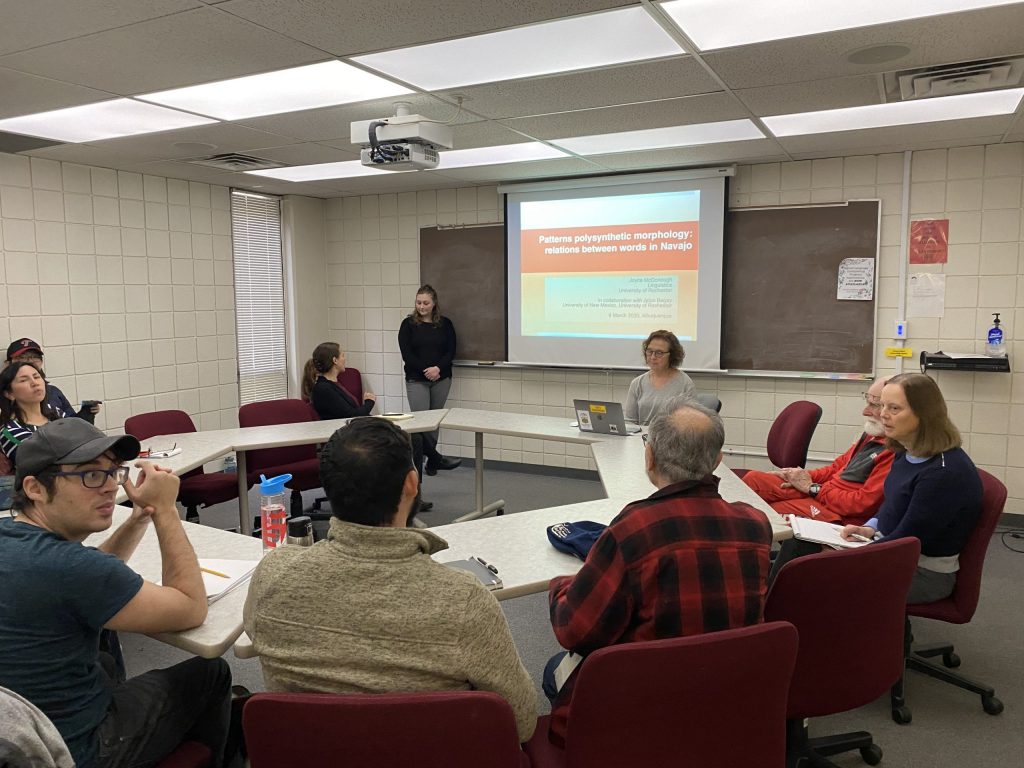
Colloquium: Joyce McDonough

Paradigmatic relations in Navajo morphology: learnability and the lexicon

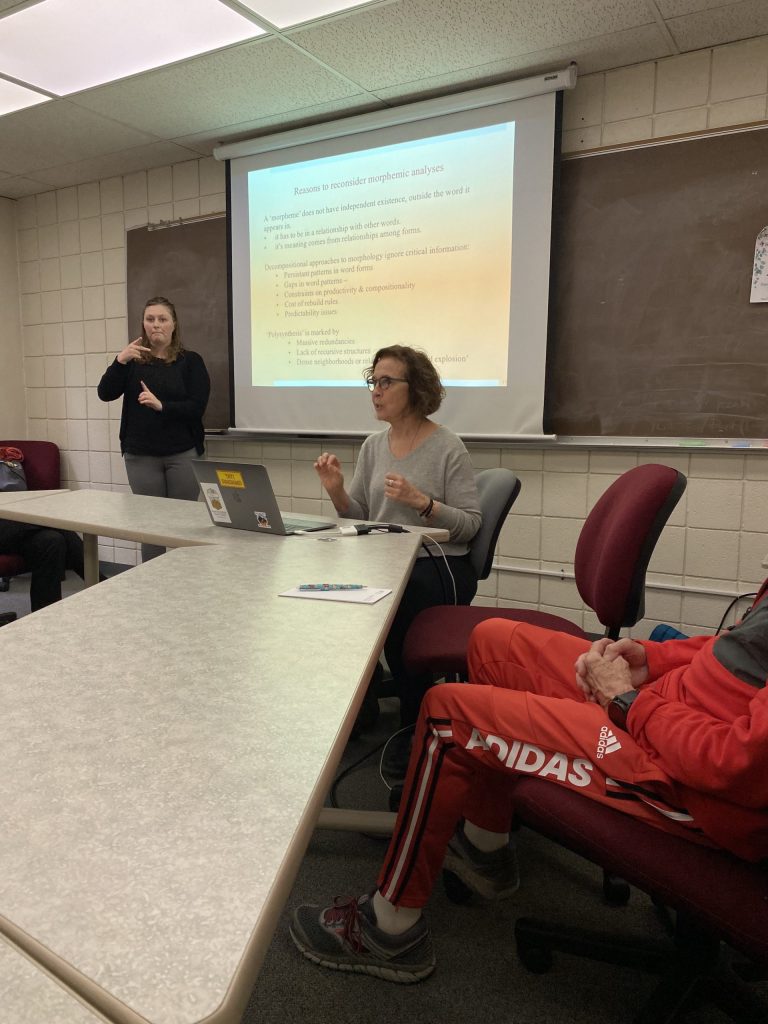
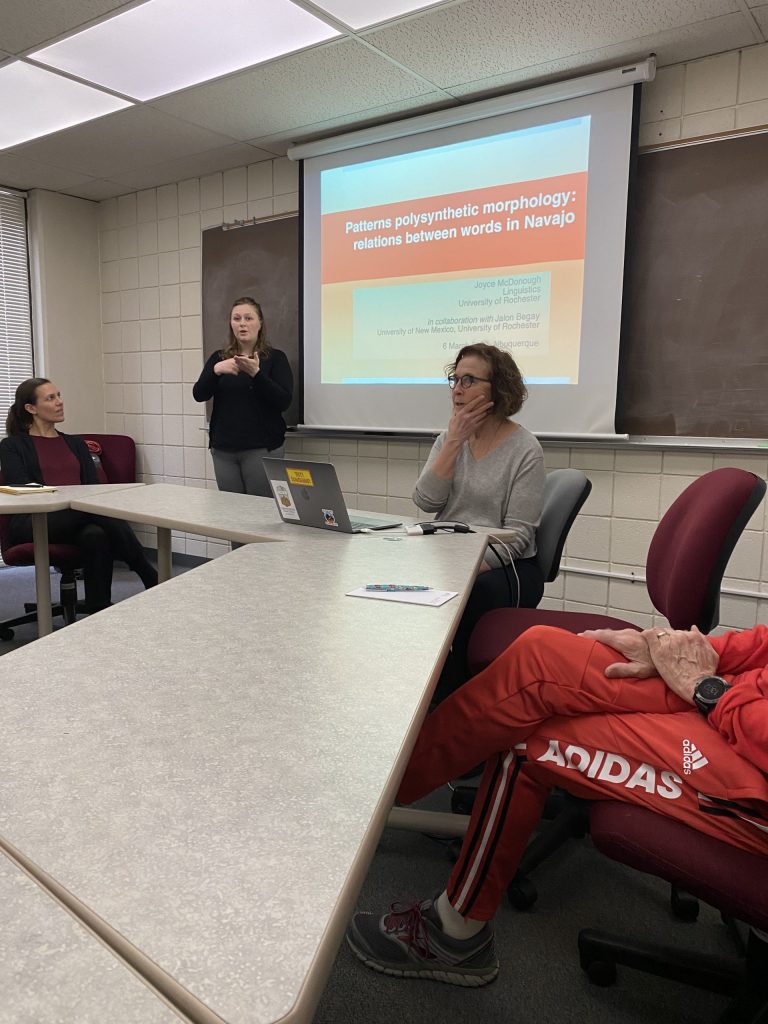
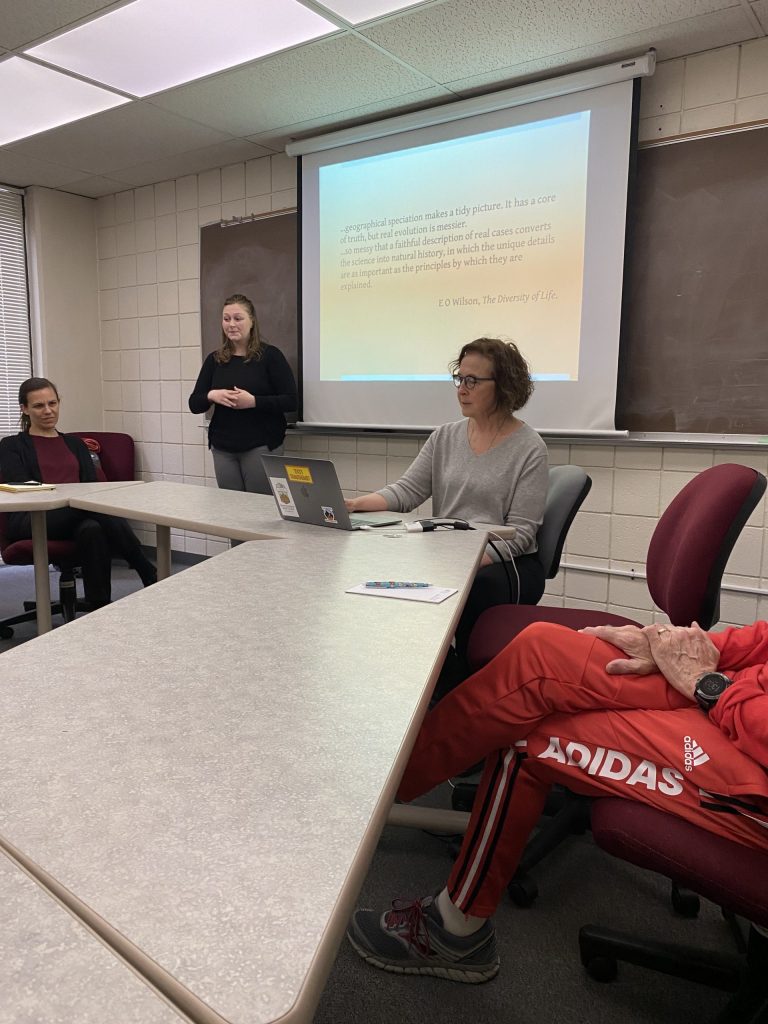
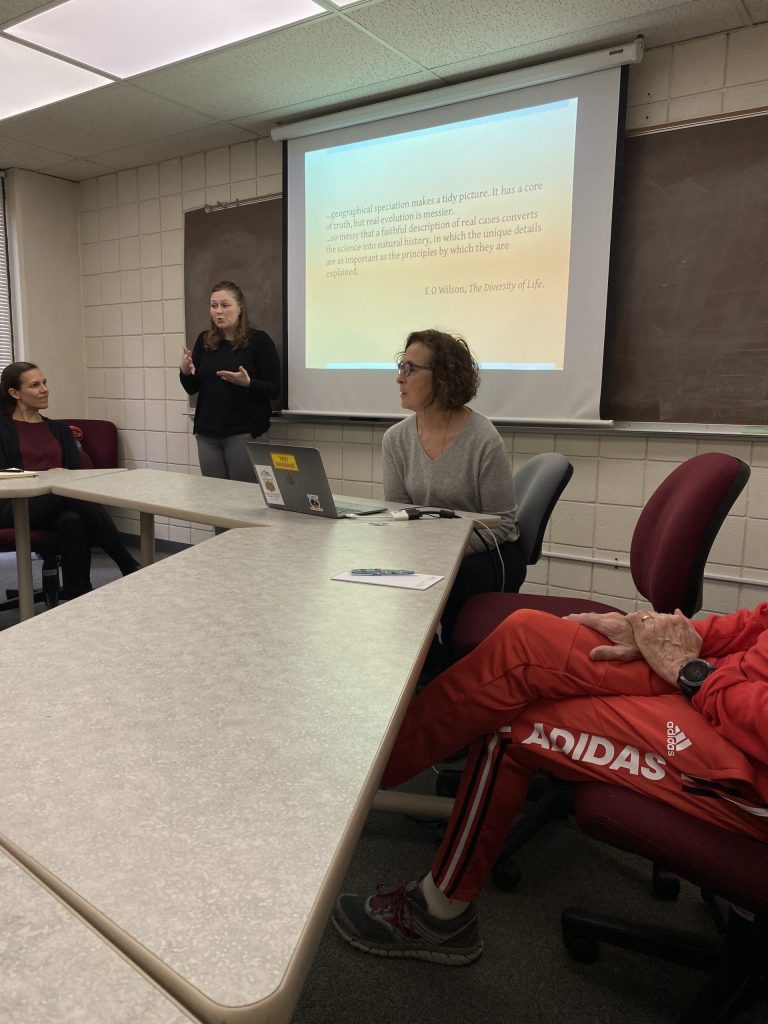
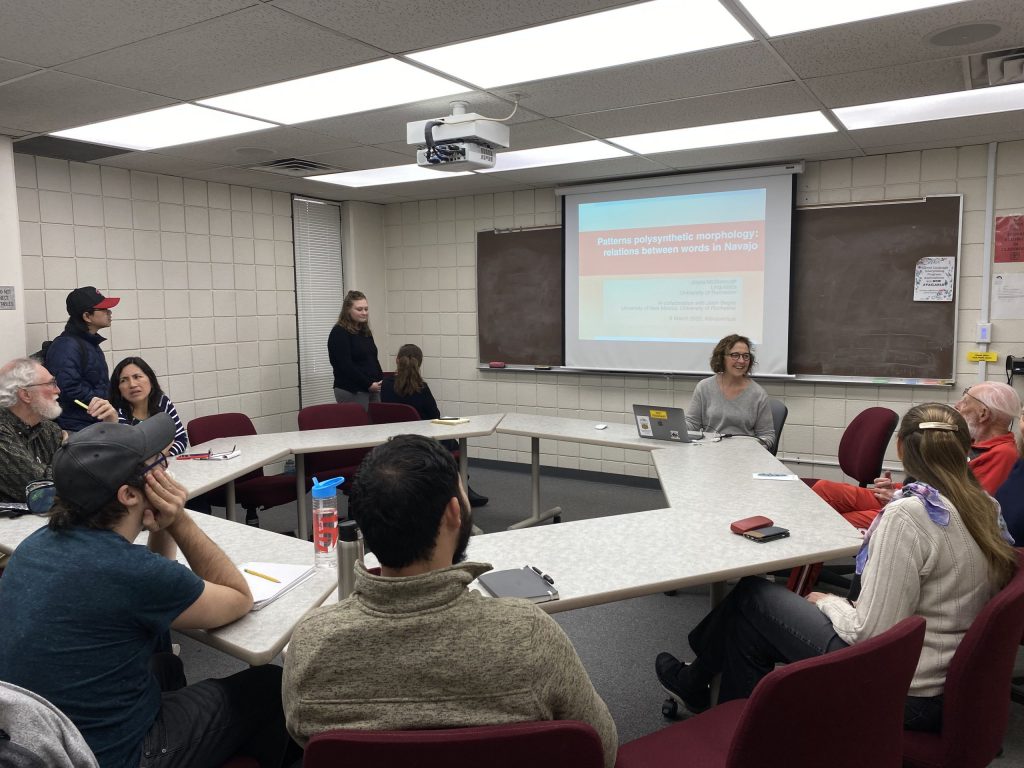
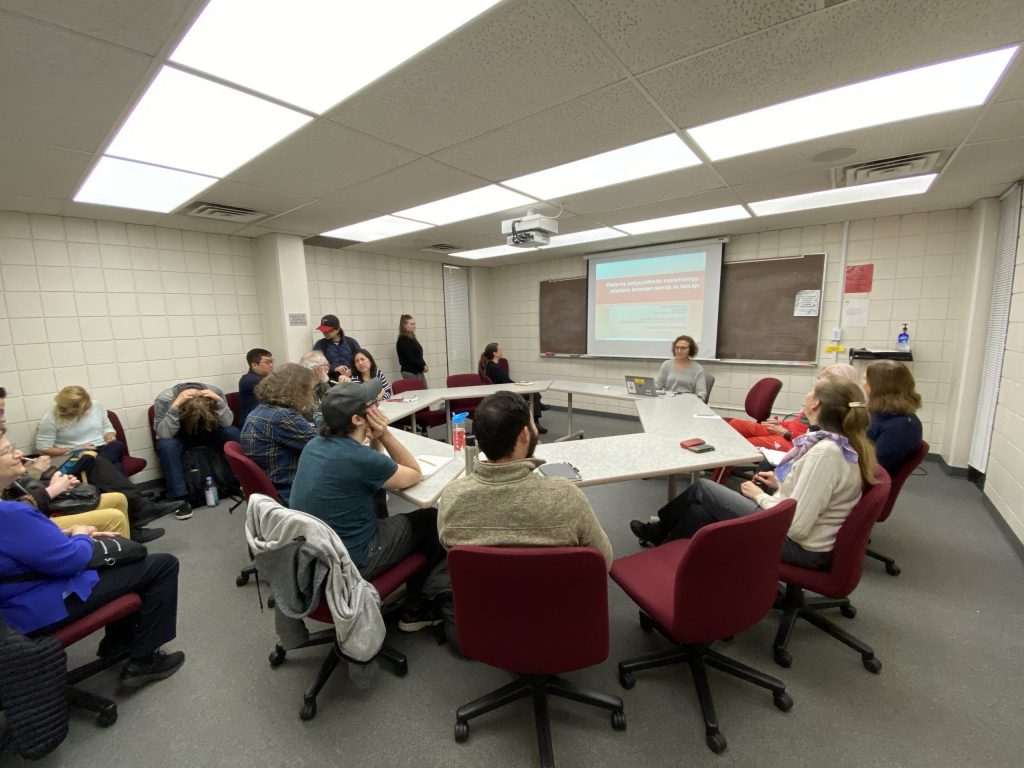
Join us for a colloquium on Friday, March 6! Dr. Joyce McDonough from the University of Rochester will be presenting on “Paradigmatic relations in Navajo morphology: learnability and the lexicon” at 1pm in Humanities 134. ASL interpretation provided on request.

The Navajo ‘verb’ is a verbal complex constituting a complex ‘polysynthetic’ inflectional system that carries significant information. These verbal complexes reside dense neighborhoods of closely related forms that differ from each other in systematic and clearly learnable ways. Thus the relationship among these word forms must be reliable, and organized in ways that facilitate reliable patterns between a known word form and a related form. The goal of this research is to investigate the patterns that whole words participate in, to identify any constituent parts, and to provide a reliable description of the structure of verbal complex based on these patterns, and crucially not on decompositional morphemic analyses (i.e. templates), that may serves as a realistic working model of the organization of a native speaker’s lexicon.

Joyce McDonough is a Professor of Linguistics at the University of Rochester in Rochester New York. She is a phonologist and phonetician working on the sound structure of Navajo and its sister Athabaskan languages to understand a speaker’s knowledge of word structure, based on the understanding that speech is the primary means of communication and learning.

Friday, March 6th, 2020

1:00 PM

Humanities Building Room 134